
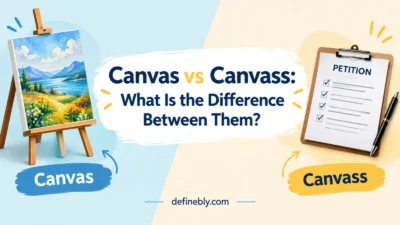
Canvas vs Canvass: What Is the Difference?
Canvas is a noun for a heavy woven fabric, used for things like paintings, tents, and sails. Canvass is mostly a verb meaning to go around…
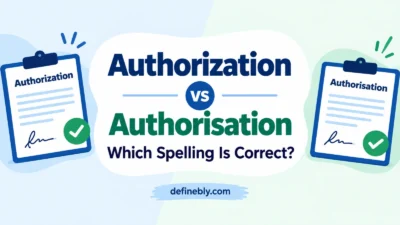
Authorization vs Authorisation: Which Spelling Is Correct?
Both spellings are correct. Authorization is standard in American English, and authorisation is standard in British English. Neither one is a…
Flutist vs. Flautist: What’s the Real Difference?
Both words mean the same thing: a person who plays the flute. Flutist is the standard American English term. Flautist is the standard British…
Babies vs. Babys: What’s the Correct Plural Spelling?
Babies is the correct plural of baby. “Babys” is not a recognized spelling in standard English, in any region or register —…
Optimize vs. Optimise: Which Spelling Should You Use?
Both spellings are correct, and both mean exactly the same thing: to make something as effective or efficient as possible. Optimize is the…
Memento vs. Momento: Which Spelling Is Actually Correct?
Memento is the correct English spelling — always. It means an object kept to trigger a memory of a person, place, or event. Momento is not a…
Heard vs. Herd: What’s the Real Difference?
Heard is the past tense of “hear” — it’s what you use anytime you’re talking about perceiving sound or receiving…

Ambiance vs. Ambience: Which Spelling Is Correct?
Both spellings are correct, and both mean exactly the same thing: the overall mood or atmosphere of a place. You’re not choosing between…
Pray vs. Prey: What’s the Real Difference?
Pray is a verb meaning to speak to a deity or higher power, or to make an earnest request. Prey is a noun meaning an animal or person being…
Crowler vs. Growler: What’s the Real Difference?
A growler is a large, reusable jug — usually glass, sometimes stainless steel — that a brewery fills from the tap and seals with a screw-on or…